

Employee and Employer DCAP Insurance Explained:
DCAP insurance (Dependent Care Assistance Program insurance) is insurance provided by the employer that lets the employee use pre-tax income to pay for eligible dependent care expenses. For workers, it reduces the income taxed. For employers, it enhances retention strategy and the overall compensation package.
This guide aims to provide all employers and HR professionals need to know about DCAP insurance in 2026, including eligibility requirements, contribution limits, tax benefits, expenses covered, and enrollment information.
What’s DCAP Insurance?
DCAP insurance is a tax qualified benefit program that enables employees to save pre-tax earnings to pay for certain dependent care expenses. The children, elderly, and disabled family members who are incapable of self-care are thought of as eligible dependents.
DCAP insurance isn’t health insurance that pays for medical expenses, but it does pay for the cost of care, such as day care centers, DCAP program before- or after-school programs, summer camps, and adult day care centers. Employees make payments to the state before it is taken out of their pocket, and they know dependents are being taken care of.
The importance of DCAP Insurance.Why DCAP Insurance is important.
Some of the biggest out-of-pocket expenses for working families are for child care and elder care. Staff may be full-time, and the daycare, babysitters, or adult care facilities can be very expensive.
DCAP insurance directly addresses this issue because it provides the flexibility of paying for these things with pre-tax money and provides the appearance of “more take-home” without increasing gross pay.
Employers benefit too. The insurance provider that offers insurance for DCAPs can:
Improve staff happiness and satisfaction
Decrease dependent care conflict-related turnover and absenteeism
Make a relatively inexpensive contribution to the overall compensation package
Recruit for talent competitively
A benefit that is important to many employees’ overall benefit expectations is dependent care assistance, which is an important benefit today.
What does DCAP Insurance Mean?
- DCAP insurance is similar to a Flexible Spending Account (FSA). It is made as follows:
- The amount of money they contribute is selected during open enrollment or when employees experience major life changes.
- Pre-tax deductions: Contributions are taken out of every paycheck, before federal, state, and Social Security taxes are withheld.
- Expense payment: The employee pays the eligible dependent care expenses out of pocket or directly from their DCAP account.
- Reimbursement: Claims submitted with supporting documentation (receipts, providers) are reimbursed from the employee’s DCAP account.
- Tax-free benefit: 100% of amounts reimbursed for qualifying expenses are tax-free.
Which of the following is covered by DCAP insurance?
DCAP insurance provides coverage for work-related dependent care expenses – this is dependent care which enables the employee (and spouse if applicable) to work or engage in a job search. Eligible expenses include:
Licensed day care and preschools
Caregivers for children in their own homes or as babysitters
Before/After school programmes
Day camps (not overnight) were conducted in the summer.
Day care for dependent elderly/disabled persons
Note: DCAP insurance is not available to cover private school tuition after preschool/preschool/kindergarten. The IRS will not allow reimbursement for educational expenses, only care expenses.
DCAP Insurance Contribution Limits
There are contribution limits set by the IRS for DCAP insurance accounts for each year. For 2026:
Single filers or married couples filing a joint return of family income: $ 5,000 per household.
$2,500 for married couples filing separately
Before choosing an amount to contribute, employees should make sure to estimate what annual dependent care expenses they can cover carefully. Unused funds may be lost at year-end for a DCAP account, since many of these accounts are “use it or lose it” accounts. Accurate planning when the tax benefit is used is fully utilized.

DCAP Insurance Tax Benefits:
The first advantage of a DCAP insurance is that you can reduce taxable income. Does not count toward contributions:
Federal income tax
Social Security (FICA) tax, which includes the Medicare tax.
Medicare tax
The majority of state income taxes
For example, a 22% federal income tax bracket employee who invests the max $5,000 in a DCAP account would save over $1,000 in federal income taxes alone, not to mention save on FICA and state taxes. High child care costs can provide a cumulative tax benefit for families.
Who can be a DCAP Insurance Member?
All of the following criteria must apply for an employee to be covered by DCAP insurance:
Have a qualifying dependent (a child under age 13 or an adult who is not able to care for themself)
Must pay for child care or elderly care due to work
Have a job (or are in the process of finding a job) while care is given
Take advantage of an employer-sponsored Dependent Care Assistance Program.
Eligibility will be based on each employer’s policy, including whether part-time employees will be eligible. DCAP provides part-time and full-time employees coverage to many entities.
The benefits to employers of offering a DCAP insurance policy:
DCAP insurance programs are a low-cost benefit to an employer but high value. Organizations reporting on DCAP insurance report:
Improved staff morale and staff turnover
Less absenteeism due to dependent care issues
More competitive compensation package and better value of compensation.
Potential savings on payroll taxes from employee DCAP contributions
DCAP insurance is particularly useful for recruiting and retaining staff in markets where compensation packages are as significant as salary.
How DCAP Insurance Funds can be used.
Funds are available to assist employees in filing their insurance claims through DCAP. The overall approach is:
Make payments directly to the dependent care provider.
Have receipts and provider info on hand.
Report via the benefits portal/plan administrator for reimbursement.
Get reimbursement from the DCAP account tax-free.
Some plans might offer a debit card to be linked to the DCAP account and paid directly from it. In all cases, funds have to be spent on expenses in the plan year.
Through DCAP, insurance for Flexible and Remote Work Arrangements.
DCAP insurance is even more important, as an increasing number of people are working remotely and with flexible hours. DCAP funds, before taxes, may be used to pay for:
In-home child care workers and babysitters
Part-time daycare arrangements
Care Services that accommodate non-traditional work hours.
A work-life balance commitment is evident in employers offering DCAP insurance programs, with real-world consequences for recruitment and retention.
Myths about DCAP Insurance
DCAP “is applicable to private school tuition.
It does not. The only costs that the IRS will reimburse with DCAP are care-related costs. Tuition for private (elementary/secondary) school is NOT eligible, even if child care is provided.
Parents with young children can only use “DCAP.
DCAP insurance is also applicable to disabled adult dependents or elderly parents who depend on the worker for their daily care, thus applying to many different types of families.
“If funds are not used, DCAP rolls over.”
In most instances, this is not true. What is left over typically goes to waste at the end of the year. A short grace period may be provided in some plans. This needs careful planning by employees to prevent losing money.
DCAP Insurance/Other Benefits.
DCAP insurance can be used to help pay for other dependent care assistance, including:
Employer-provided childcare subsidies
State dependent care tax credits.
Flexible work or telework opportunities.
Employers should make clear to their employees how DCAP insurance relates to other benefits that they provide employees, to boost participation rates, and to ensure that employees are maximizing their total compensation.
Life changes occur, and DCAP insurance is involved.
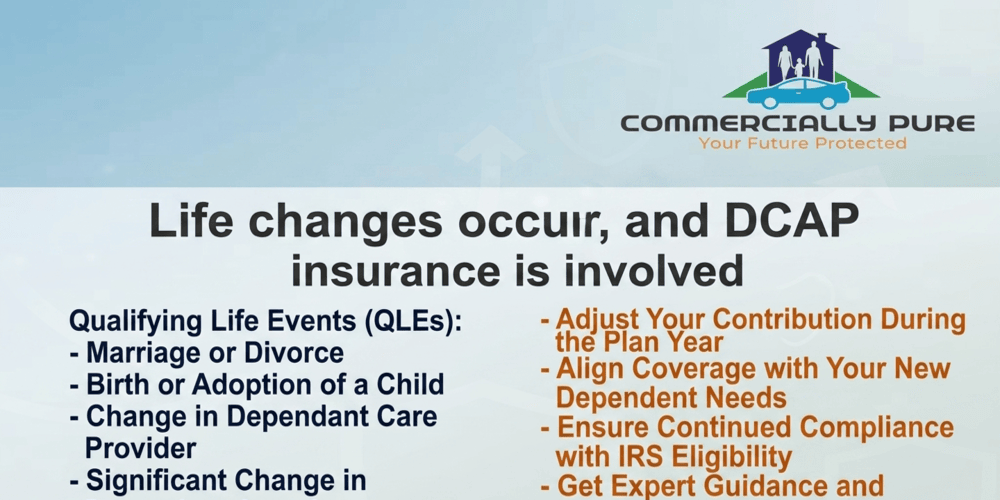
In many cases, there are qualifying life events that allow employees to adjust their DCAP contribution aside from open enrollment, such as an increase in an individual’s care needs, a change in employment status, birth or adoption of a child. When any of the events listed above take place, employees should let their HR or benefits administrator know as soon as possible to make sure their elections are in line with their current needs.
Eligibility: If you want to join the DCAP Insurance, you can apply to the group for eligibility.
DCAP insurance is typically provided on the company HR portal/benefits platform to the majority of employees each year. Steps typically include:
Review your yearly estimated childcare costs.
Choose your contribution level for the year (up to the IRS limit).
Employer-submitted election through the employer’s benefits system.
If you experience a qualifying life change during the year, be sure to update your elections!
Some employers provide an online calculator or information to help employees decide on a contribution amount.
The disadvantages of not buying into DCAP Insurance.
Those who don’t participate in the DCAP insurance fund will pay for care with after-tax dollars — an effective increase in cost. Plus, those who decline can lose out on:
Huge federal and state income tax benefits.
Reductions in social security taxes and Medicare taxes.
Employers’ contribution to the DCAP account (if applicable)
Not having DCAP insurance can be a significant loss of opportunity for working families with continuing dependent care costs every year.
DCAP BTLS Meaning
During an emergency medical situation, DCAP BTLS meaning is an acronym that helps the first responders to quickly and accurately assess patients with trauma. DCAP-BTLS stands for Deformities, Contusions, Abrasions, Punctures/Penetrations, Burns, Tenderness, Lacerations, and Swelling. It is a head-to-toe document when looking for visible injuries on a child’s body, ensuring nothing is overlooked, and it serves as a step-by-step document.
What Is DCAP-BTLS?
DCAP-BTLS is a trauma assessment tool that is widely utilized in emergency medical services (EMS), first-aid courses, and paramedic school. This is a systematic approach for head-to-toe examinations to identify any injuries that may not be readily apparent to the health care provider. The DCAP-BTLS approach is very important in prehospital trauma care as it ensures the first responder doesn’t forget to check for any serious injury.
What Does DCAPBTLS Mean?
DCAPBTLS is another spelling of DCAP-BTLS without the hyphens or spaces—the same as what first responders do during emergency medical assessment of the patient after trauma. The checklist helps standardize evaluation of the patient during high-stress situations and helps ensure that all aspects of evaluation are performed.
BTLS Meaning
Basic Trauma Life Support (BTLS) is an educational system that aims to provide those responding to trauma with knowledge and skills to assess and manage trauma patients effectively. Rapid evaluation of the patient’s condition, airway management, bleeding control, patient stabilization, and safe transportation to appropriate medical facilities is the focus of BTLS. DCAP-BTLS assessment practices are commonly integrated into the BTLS curriculum while providing EMS training.
What Is DCAP BTLS TIC?
DCAP BTLS TIC is the blend of two complementary assessment tools of EMS for complete trauma evaluation. DCAP-BTLS is used to determine external physical injury, and TIC is used to determine any further injury if signs of possible fracture or musculoskeletal injury are present: Tenderness, Instability and Crepitus. When combined, DCAP-BTLS and TIC result in more accurate and comprehensive trauma assessments in emergencies, especially for orthopedic injuries.
So, what is Clean Cars for All California?
Clean Cars for All California (CCA) is a vehicle replacement and mobility assistance program that will help Californians eligible for the program switch from older high-polluting vehicles to cleaner modes of transportation. Participants who qualify may receive financial incentives for the purchase of electric vehicles (EVs), plug-in hybrid vehicles, public transportation passes, or other clean transportation options (depending on location). The program is regionally administered in California air quality management districts.
Free Car Grants in California: What are they?
The term “free car grants California” is typically used to describe government or non-profit programs that assist those who qualify in their ability to access reliable transportation. Free cars are scarce, but there are groups and public programs that offer grants and financial assistance and/or opportunities to purchase cars at a discount. The qualifications are typically based on income, vehicle age, and area.
Free Grants to Buy a Car in California for Low-Income Families.
The free grants to low-income families to purchase vehicles in California are intended to make transportation more accessible for low-income households that qualify. State agencies, nongovernment organizations, and community programs might be able to offer financial assistance or buy incentives to help qualifying families purchase reliable, fuel-efficient cars to help them get to work, school, and other places. Availability of the program in the area should be checked with local air quality districts.
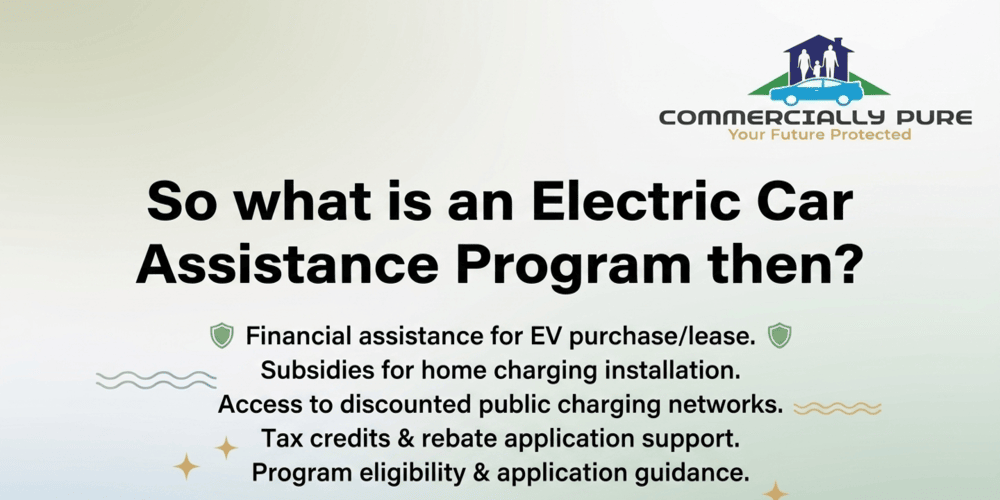
So what is an Electric Car Assistance Program then?
An electric car assistance program or plan is a program that is developed for qualified electric vehicle buyers to reduce the initial purchase/lease cost of an electric vehicle. Assistance can be in the form of grants, rebates, tax incentives, or low-interest financing. These programs will foster clean transport and contribute to making EVs more accessible to people who can’t afford them.
What is a Grant for Purchase of Vehicle?
Vehicle Purchase Grant: A financial assistance grant to help purchase a vehicle to get to work, medical, disability, and/or essential transportation needs. Information on grants, eligibility, and grant amounts will vary with the granting organization and guidelines of the grant program. Would-be applicants ought to investigate the federal and state programs to find the most appropriate one to their situation.
What is Clean Cars for All?
Clean Cars for All is an incentive program for the environment to encourage replacing older and higher-emission cars with cleaner modes of transportation. Eligible participants can apply for funding for electric vehicles, plug-in hybrid vehicles, e-bikes, or public transport subsidies, which can help to decrease air pollution and GHG emissions in participating areas.
What’s a Clean Air Vehicle?
Clean air vehicles: vehicles that have significantly lower emissions than a vehicle powered by gasoline or diesel. These include battery electric vehicles (BEVs), hydrogen fuel cell vehicles, and qualifying plug-in hybrid vehicles. These vehicles play a vital role in enhancing the air quality in the area, minimizing fuel usage, and promoting overall environmental sustainability.
Pros
- DCAP-BTLS offers a systematic, reproducible approach to recognizing injuries related to traumatic events.
- Supports and empowers effective and consistent assessment of patients under pressure by emergency responders.
- Clean vehicle assistance programs are tools to offset the initial cost of cleaner vehicle ownership.
- The incentives for EVs reduce costs of EV ownership and operation.
- Clean air technologies lead to reduced emissions and benefit the environment.
- Vehicle grant programs enhance transportation access for eligible low-income families.
- For the promotion of energy-efficient vehicles, financial assistance programs are available.
- Government incentive programs may make EVs more affordable for eligible buyers.
Cons
- To be effective, DCAP-BTLS needs to be applied in the context of proper EMS or first aid training.
- Usually, vehicle assistance programs have strict income and eligibility requirements.
- Geographical areas may not be eligible for grant funding or have limited funding.
- EV’s tend to be higher cost than gasoline-powered cars, and there is lower incentive coverage.
- There is insufficient service in some rural areas or where charging infrastructure is lacking.
- Assistance programs can have lengthy and complicated application and approval processes.
- Financial aid and replacement of vehicles are not available for all applicants.
- Limited government funding may affect incentive programs and cause them to be modified or discontinued.
Conclusion
Knowing about DCAP-BTLS is important for emergency medical training and if you’re interested in programs like Clean Cars for All, electric car assistance, and vehicle purchase grants. DCAP-BTLS improves trauma assessment, which helps emergency responders to accurately and quickly assess trauma. Clean transportation programs, however, support eligible households in having access to clean transportation options at an affordable cost. Thoroughly check all the eligibility criteria, benefits, amount of available funds, and how to apply before applying for any grant or assistance program to decide which one suits you the best.
Questions and answers about DCAP insurance.
Q1: What is DCAP insurance?
DCAP insurance is an acronym for dependent care assistance program insurance. It allows workers to save money on pre-tax dollars for “qualifying” dependent care costs, which reduces the worker’s taxable income and increases how much money they have in their pocket.
Q2: To be eligible for the insurance, who is covered with DCAP?
Any employee who has a child dependant under the age of 13, an elderly dependant, or a disabled family member who needs care is eligible for DCAP insurance if their employer provides a Dependent Care Assistance Program.
Q3: What expenses does DCAP insurance pay for?
Licensed daycare centers, babysitters, before- or after-school care, summer day camps, and adult day care are all examples of eligible expenses. Preschool is not included in private school tuition.
Q4: What is the insurance contribution cap for 2026 for the DCAP?
The IRS limit is $5,000 per family per year ($2,500 per person for individuals filing separately).
Q5: How is the DCAP insurance tax-friendly?
Thus, contributions are not included in federal income tax, Social Security tax, Medicare tax, and most state income taxes, which reduces an employee’s net tax liability.
Q6: Is it possible to use the DCAP insurance for the tuition of a private school?
No. The tuition of a private school (excluding preschool or kindergarten) will not qualify as an eligible DCAP expense.
Q7: Can employers offer DCAP insurance to part-time workers?
Each employer will have their own eligibility requirements. Many provide part-time workers with coverage under DCAP; however, workers should check with their HR department.
Q8. Do the DCAP funds go back in effect?
Yes, however, only for eligible expenses while the coverage is in effect, and only as much as the balance of the contributed account.
Q9: What’s the difference between DCAP insurance and a Health FSA?
No. Health FSAs cover health, dental, and vision benefits. The entire amount of DCAP insurance is for dependent care costs. Either may be kept concurrently.
Q10: How are any unexpended funds of the DCAP allocated at the end of the year?
A “use it or lose it” rule exists in the IRS that will typically cause any unused DCAP to be lost at year’s end. However, with proper planning and contribution estimates, this can be avoided.