

Grocery Store Insurance Coverage Guide 2026 is complete.
Grocery store insurance is one of the broadest commercial insurance policies available. It can be used to cover grocery stores, supermarkets or small food shops from all potential financial losses which may be caused by damage to their property, theft, liability claims, equipment failure and employee injuries. It may also indicate that a single customer slip-and-fall, refrigeration failure or fire can be a huge monetary threat to an otherwise profitable business.
Operating a grocery store involves having to deal with inventory, employees, machinery, and customers’ safety at the same time. With the proper insurance, operations continue, invested assets are safeguarded, and state and lease requirements are met.
So, why is it significant to have grocery store insurance?
Grocery store insurance is crucial because retail food companies are subject to a very specific array of risks every day: fire, theft, spoiled inventory, equipment failure and customer injury claims – all of which can create significant, unanticipated expenses.
There are also other advantages to insurance than just financial protection; in many cases, it’s legally and contractually required. Workers’ compensation coverage is required in most states, and stores may require general liability or property insurance before opening or renewing a lease with a landlord or vendor. Covering is not simply about risk management; it is a requirement for building business relationships and doing business.
Grocery Store Insurance: What is Covered?
In general, grocery store insurance is a mix of various insurance coverages in the form of one commercial insurance coverage. The risks that each element addresses are different.
Property Insurance
Property insurance protects the building, shelving, refrigeration systems, stock and more against fire, storm, vandalism and theft. In the case of grocery stores and grocery outlet jobs, the level of inventory cover is particularly important as the cost of spoilage or damage of perishable products can mount quickly. Many policies also provide equipment breakdown insurance to repair or replace critical equipment like HVAC units and refrigerators, among other things.
General Liability Insurance
General liability insurance covers the store owner if a customer or third party is injured and/or property damage occurs while they are visiting the store. Common causes include slip and fall accidents, injuries from falling merchandise and injuries from spills. This policy comes in handy for defence expenses, settlement and court-ordered payments and will stop a single occurrence ruining business finances.
Product Liability Insurance
A store is covered by product liability coverage if a food product that it sells causes illness or injury to a customer. Coverage is a basic component of the insurance policies that most grocery stores have; you can always find something you can eat in a grocery store, whether it’s in bulk or not.
Workers’ Compensation Insurance
Workers’ compensation: Insurance to cover medical expenses and the loss of income for a worker who is injured at work. It’s in every grocery store insurance policy and required in most States in the U.S.
Business Interruption Insurance
Business interruption insurance offers coverage if a covered peril, such as a flood or fire, temporarily shuts down a business. This coverage is the reason that many stores can endure significant disturbances and not close permanently.
Equipment Breakdown Coverage
Equipment breakdown coverage protects against mechanical or electrical failure of critical equipment like refrigerators, freezers and point-of-sale equipment. This is especially beneficial for food retailers, who can lose perishable stock rather quickly, in the event of a refrigeration failure.
Commercial Auto Insurance
Commercial auto insurance is used for cars that are owned by a company and that are used for business transportation or deliveries. It includes coverage for accidents, property damage and liability claims related to the use of the vehicle.
Grocery Store Insurance Programs – Grocery Store Insurance Coverage Programs With Bundled Insurance Coverage For Retailers.
Grocery store insurance packages are a combination of several critical coverages that are designed specifically for the grocery store, jewel grocery weekly ads, convenience store and food retailer. Each program is usually composed of:
Building, stock & plant insurance
General liability and product liability coverage.
Equipment breakdown coverage
Business interruption protection
Workers’ compensation
Employee dishonesty coverage
A bundled program is most important for its versatility. Owners can tailor the amount of cover they require for their store to meet their needs for size, location and type of operation, to ensure their shop is fully covered but that they don’t pay for excess cover they don’t need.
What is the difference between Small vs. Large Grocery Store Coverage?
For small grocery stores, the most common types of insurance are property insurance, general liability insurance, and workers’ compensation. These policies are simple, but include coverage on the most common risks in life.
Supermarkets and regional supermarket chains require coverage that is commensurate with the increased volume, staffing, length and breadth of inventory and complexity of operational needs, such as product liability coverage, business interruption, equipment breakdown and commercial auto coverage.
Having an insurance plan that matches the size of the store and the structure of the operation can mean having insurance that matches the amount of risk exposure and not overspending on insurance that is not proportionate to the risk exposure.
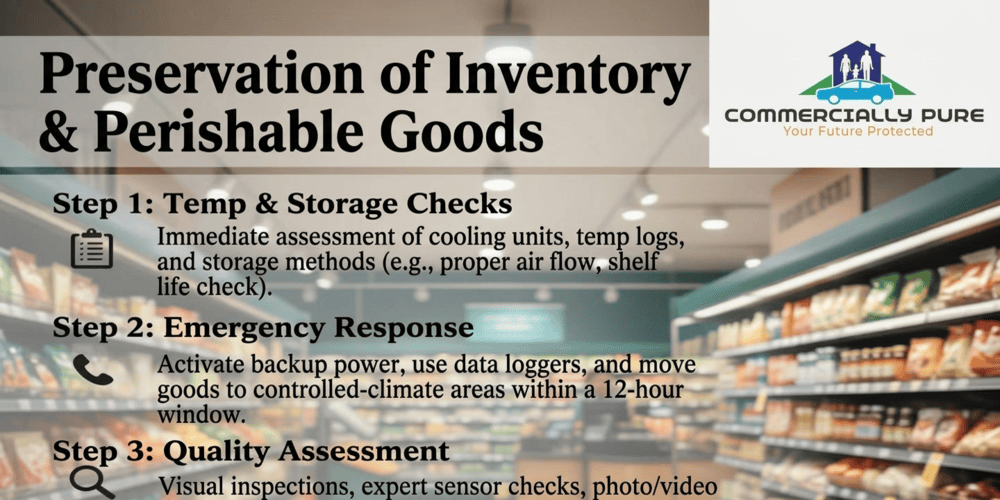
Preservation of Inventory & Perishable Goods
Perishable inventory is one of the greatest financial risks that any food store is faced with. Thousands of dollars of product can spoil in a matter of hours when the refrigerator fails, a power outage occurs or some disaster strikes unexpectedly.
The most effective way to do this is to purchase both property insurance and equipment breakdown coverage. These policies work together to prevent business-ending financial events due to inventory loss from mechanical failures, power outages or physical damage events.
Grocery Store Liability Issues:
Grocery stores are more hazardous than a lot of other stores with regards to liability. Most common causes of liability are:
Falls and trips on slippery or uneven surfaces
Falls of merchandise and injuries to customers
Illness or injury caused by contaminated or falsely labelled food products.
A liability claim can be expensive, and the legal costs and settlement can be huge. General and product liability insurance can help with these costs, speed up claim resolution and help preserve a store’s reputation with consumers and the public.
Risk Management for Grocery Stores
Insurance and risk management work hand-in-hand, and investing in insurance often reduces risk management costs.
Consider the following Risk Management measures that will help minimize the likelihood of claims, and that can help lower insurance premiums:
Maintenance of floors: to keep aisles clean, dry and hazard-free to prevent slip and fall accidents
Staff training: Making sure workers use equipment in the correct way and food safety procedures are adhered to
Shelving safety: Inspecting shelving and making sure it is safe to prevent products from falling off shelves
Security infrastructure: Installation of a camera system and alarm system to deter theft and vandalism.
Clear signage: Place signs in hazardous areas to alert of possible dangers
Risk management pays off – insurers are more likely to offer competitive rates for a proactive safety program.
There are a few factors that may contribute to the differences in grocery store insurance rates.
There are a number of factors that affect the premiums that grocery store insurance companies charge:
Size and square footage of the store
Location of geographic area and local crime rates
Number of employees
Type of products sold (for example, alcohol exposing a risk)
Claims history
Self-selected coverage amounts and deductibles
Premiums can be controlled in several ways, such as maintaining a clean claims history, training employees to be safe, enhancing security systems and maintenance of regular equipment.
Grocery store insurance claims are dealt with the exact same method as all other food service insurance claims.
The most important thing to ensure a swift and fair resolution is to make prompt and quick claims. The general procedure is:
Contact your insurance company about the loss ASAP.
Bring as much documentation as possible (including pictures, receipts, incident report, witness statements, etc.)
Get all documents to the insurance company as soon as possible
Communicate with assigned claims adjuster during the review process
Those who own stores and know about this process in advance have a better chance at recovering quickly and returning to business as usual, with little upheaval.
Selecting a suitable grocery store insurance supplier
A good insurance company will be familiar with the industry, grocery outlet weekly ad, allow for quick response to claims and be flexible enough to develop a policy that is more representative of a grocery store.
When you are thinking about providers, think about providers who:
Retail / Grocery Store Experience in Particular
Can be adjusted to the size of the store, the mix of products and location.
It claims to be responsive and is reputed for having good customer support.
Reasonable price per coverage.
Readiness to advice on risk management when expanding business
You can have a relationship with a knowledgeable insurer, not only for a policy, but a relationship for counsel on what coverages you should add to your policy as your business expands.
Legal & Lease requirements met.
Clearly, one of the easiest reasons why grocery stores need insurance is that they are required to do so. Specific requirements include:
Workers’ compensation: Compulsory in most states in the U.S. for businesses that have employees
General liability: This kind of coverage is generally mandated by landlords as a stipulation of a lease.
Property insurance: Could be required by property owners or lenders.
Having enough insurance provides a store with the ability to fulfill these requirements, keep the leases and honor vendor contracts without interruption.
The benefits of Grocery Store Insurance.
Grocery store insurance is much more than just compliant – it provides a lot of value:
Financial protection: Provides protection should accidents, thefts, equipment problems, or lawsuits occur.
Business continuity: Business interruption coverage will take care of business continuity if the building must be closed.
The protection of employees: Workers’ compensation offers medical treatment and wage replacement for injured employees
Responsible risk management can be seen to improve Customer trust within the community.
Operational focus: Owners who have the right coverage can focus on operating and expanding the business, as opposed to worst-case scenarios.
Locate nearest grocery stores near me.
One of the fastest ways to locate nearby grocery stores, supermarkets and local stores is to find the closest grocery store near me. Most shops offer fresh fruit and vegetables, dairy products, meat, bread and household products. Use online maps or store locator tools to easily find nearby options – directions, customer ratings, real-time operating hours and more.
Grocery Store Near
Having a grocery store nearby means that you have all the essentials of everyday life like fresh fruit and vegetables, frozen food, drinks, and personal care products at your fingertips, anytime you want them. Local shopping results in shorter travel distances and easy access to fresh food when it is needed. When it comes to picking a neighbourhood – or even a weekly plan – one of the most convenient factors to take into consideration is that it’s near a suitable dining establishment.
Store Hours Grocery
Check store operating times to make more efficient trips before heading to a store. Supermarkets have extended hours, including 24-hour service; some supermarkets will adapt their hours during public holidays and weekends. Stay informed about the current state and operating hours of a grocery store, or any other essential details, with the help of a grocery store mobile app and/or a website that provides the information before heading to the store.
Discount Groceries Online
Online discount grocery shopping enables consumers to save money on food and other products within the home by shopping online for groceries. A lot of large stores will also provide coupons online, bulk discounts, memberships and home delivery, which makes it more affordable and convenient to shop for groceries. The most effective method to save on your groceries weekly is to compare the prices from a number of online grocery stores.
A Grocer’s Place In Your Area
Proximity search results come in handy for a grocery store near me; they help in knowing which grocery stores have fresh food, drinks, household supplies and everyday necessities in the immediate vicinity. Additionally, many grocery stores provide curbside pickup, same-day delivery and a hassle-free online ordering system — allowing you to shop on your time. If they have search tools such as Google Maps or their own store locator, it will show you where the store is, the hours they are open and the services they provide.
Grocery Store Calistoga
The Calistoga grocery store provides fresh produce, local specialty products, drinks and household products to both locals and visitors. Calistoga grocery stores are convenient solutions for getting food before or after visiting California’s famous wine country.
Healdsburg Grocery Stores
Healdsburg grocery stores offer plenty of options for shoppers, from supermarkets to specialty food stores and farmers’ markets. The fresh produce, certified organic products, gourmet food items and everyday grocery staples can be found there. The food retail landscape mirrors the food culture, and Healdsburg is a rewarding community to purchase food there daily or for special occasions.
Napa Valley’s Grocery Store
For the many tourists who make their home in the Napa Valley as well as the full-time residents, a grocery store in Napa is convenient. Local shops will have fresh produce, local wines, gourmet cooking supplies and everyday essentials in general. Whether you’re picking up the ingredients for a tasty local dish or need to grab some groceries, Napa Valley grocery stores can accommodate a variety of needs.
Oakville Market Healdsburg
Oakville Market Healdsburg is known for its prepared food, beverages and locally sourced items, fresh food and specialty groceries. The popular stop for great food is in the wine country in Sonoma County. What differentiates it is its selection of artisan and regional products, which makes it a best place for shoppers who value quality and local products.
Napa Valley Oakville
A celebrated area known for world-class vineyards, wineries, gourmet dining and specialty food markets, Oakville grocery Napa Valley Oakville offers a variety of experiences in this bucolic setting. A lot of visitors shop for food at the local markets and shops both for fresh fruit and vegetables, and for local souvenirs and specialties. With its central location in the Napa Valley wine country, Oakville is a logical location for high-quality food and beverage retail.
Groceries Stores
Grocery stores offer a variety of food products, beverages, frozen foods, bakery goods, dairy, snack foods and household products. Over the past few years, supermarkets have increasingly begun to adopt online ordering, home delivery and loyalty reward programs to enhance the shopping experience. Today’s grocery retailers offer more flexibility and value – no matter whether you’re shopping in-store or online.
This grocery supermarket is close to me, in the heart of the city.
When you go grocery supermarket near me, you’ll find the big format grocery stores which offer thousands of products all under one roof. Supermarkets typically include fresh produce, a pharmacy, a bakery and a deli, and lots of parking space, making them an all-in-one for most families. Several major grocery stores will also offer discounts, such as gas discounts and online loyalty programs, for continued savings.
Jewel Ads
Jewel’s advertisements feature weekly promotions, discounts, special offers and electronic grocery coupons for seasonal items, household essentials, groceries and beverages. Before you do your shopping, review the weekly ad, which Jewel provides on their website and App, to save money every week on groceries.
Jewel U Coupons
Jewel U coupons are exclusive digital savings coupons that are provided as a part of a Jewel rewards program. Coupons are available online via the Jewel website and mobile App for customers to take advantage of discounts for groceries, pharmaceuticals and certain household items. One of the easiest ways to save is to clip digital coupons prior to trips (no additional work is involved when checking out).
Jewel Near Me Now
Now, people will be able to search Jewel near me; it will show Jewel supermarkets near them, directions to that Jewel supermarket, the current time of that Jewel supermarket, services provided and contact information for that Jewel supermarket. Some Jewel stores even have a pharmacy, curbside pickup and grocery delivery – making it an all-in-one retailing destination.
The ideal location to get 24 Hour Jewel Near Me.
If you are one of those who work the night shift, shop late, or get up early, a Jewel 24-hour stores search will help you find stores that are open late. But not every Jewel shop is open after hours, so you should check what is jewel business hours are at your local Jewel store on Jewel’s website or on Google Maps before going to a Jewel store.
Pros
Fresh food and household supplies, all at the last minute, can be obtained from grocery stores.
Online grocery shopping is convenient and provides options when it comes to home delivery.
Using weekly advertisements and online coupons can save on daily food costs.
Supermarkets combine all the products into one single location.
Other stores have complete-service deli, bakery and pharmacy areas.
Loyalty programs offer continuous discounts and exclusive offers to loyal customers.
Local grocery stores support and give back to the local communities and businesses.
Shopping hours are convenient, and late-night shopping hours are available so that you can get what you need when you need it.
Cons
Prices of food products vary widely from store to store and from location to location.
Sometimes there might be minimum orders and additional fees involved with online grocery delivery.
Weekly adverts can be placed for popular items that can sell out the same week.
There are a few stores that may be open for a shorter time on public holidays.
Not all locations or zip codes may offer this service.
At busy shopping times, supermarket stores can be crowded.
The quality of fresh products can fluctuate from one store to another, depending on the season and supply chain conditions.
Loyalty program discounts typically involve enrolling in a loyalty program or downloading an app.
Conclusion
Selecting a grocery store can save time and money whether you’re looking for the nearest grocery store near you, discount groceries online, Napa Valley grocery stores, or checking out the latest Jewel ads and coupons. You can compare the prices, hours of operation, services offered and customer reviews to determine the best option to choose. Being able to use digital coupons, loyalty programs and online ordering will lower your food expenses every day and make shopping easier no matter how you shop.
Answers to a few common questions concerning grocery store insurance.
Q1: What is the insurance for grocery stores?
Grocery store insurance is the business insurance that protects grocery stores from financial losses due to property damage, liability claims, employee injuries, theft, equipment failures, and so much more.
Q2: What Does Grocery Store Insurance Cover?
In general, the policies cover property insurance, general liability insurance, product liability insurance, workers’ compensation, business interruption insurance, equipment breakdown insurance, and commercial vehicle insurance.
Q3: Do grocery stores have to get insurance?
Workers’ compensation is mandated in most states in the U.S. Where not legally required, landlords and lenders may also require general liability and property insurance.
Q4) How much does it cost to have a grocery store insured?
It will be premium rates that are dependent on product types, coverage limits, claims history, number of employees, size of the store, and location. Those stores in the higher-risk areas pay more premiums, and stores that sell regulated products like alcohol pay less.
Q5: Does grocery store insurance cover grocery store employee injuries?
Yes. Grocery stores generally carry workers’ compensation insurance, which pays workers to replace their wages and pay for medical expenses.
Q6: If the food becomes spoiled or stolen in the grocery store, will their insurance take care of it?
Yes. Property insurance and equipment breakdown coverage protect against the loss of inventory due to theft, refrigeration equipment failure, power outages and more.
Q7: Does grocery store insurance include delivery vehicles?
Yes. Commercial Auto Insurance is a kind of insurance which is often included in the overall insurance plan of a grocery shop and is applied to the automobiles utilized for deliveries or other business purposes.
Q8: Does grocery store insurance have a special cover for perishable items?
Yes. Perishable items that are damaged due to equipment failure, loss of power or damage in a disaster are covered by the inventory coverage portion of a property insurance policy.
Q9: How to choose a Grocery Store Insurance Company?
Look for an insurance provider that has a proven track record in retail or grocery insurance, and offers customizable policies, competitive rates and claims support.
Q10: What was the impact of grocery store insurance on business owners’ success?