

Root Canal Cost With Insurance Explained
The out-of-pocket expense for a root canal procedure (with insurance) can vary from $0 to $1,000 depending on the type of tooth, complexity of the root canal, and insurance. If your insurance doesn’t cover this procedure, it may cost between $300 and $2,000 or more. Patients should be aware of the factors that can influence the cost of a root canal, and how a dental insurance plan will save them money on their root canal treatment.
Root Canal Cost With Insurance: How Much?
With dental insurance, the patient will only have to cover a part of the procedure. The insurance plan will cover between 50 percent and 80 percent of the root canal treatment, and the remaining 20 percent to 50 percent will be paid out-of-pocket; this amount typically ranges from hundreds of dollars to over 1000 dollars, depending on the tooth, the provider, and the insurance plan.
For those who aren’t insured, the cost is the entire amount, depending on the tooth involved, the extent of the infection, the dentist’s experience, and the location of the office. When patients realise how the breakdown is going to be, they are able to plan accordingly so as not to have any shock to their finances.
What are the factors determining the cost of root canal?
There are a number of factors that affect the cost of a root canal:
The location of the tooth – typically the front teeth (incisors) will be cheaper as they are simpler to construct and only have one Root. Multiple roots and more complex to treat = more expensive to treat (premolars and molars).
Severity of infection: More complicated infections can require more investigations, treatments, or specialist care.
Location: The geographic area could make a difference in the price of dental services, as prices are typically higher in larger metropolitan areas than smaller towns or rural areas, which may be due to differing overheads or market rates.
Dentist versus specialist: general dentists are able to perform root canals and may offer a reduced fee as compared to an endodontist (root canal specialist).
Other treatments: getting X-rays, sedation, post insertion or a dental crown after the procedure could add up to the price of the bill a lot.
Why is it that a root canal is more expensive without insurance?
If a patient does not have insurance, they are charged the full (undiscounted) amount for each of the components: examinations, X-rays, the root canal, and follow-up restoration. Insurance companies are able to invoice dental providers for less than they normally charge for the services.
That is the reason why a root canal might seem costly to the individual who is not insured. Inquire about the discount that a dental office offers the uninsured or offers for self-pay patients.
What are the costs of root canals?
The average price of root canal treatment is $700 to $1,800, depending on a variety of factors, such as the tooth that is treated, how much does a root canal cost the extent of the treatment, where you are, and whether or not you have insurance. The cost of molar teeth is generally higher than front teeth, as they have more canals and take longer to treat.
Comprehensive cost upfront means that patients can budget for their care and avoid any surprises. Here’s a breakdown of all the most important factors that determine the cost of a root canal and answers to some of the most frequently asked questions by patients before scheduling.
Root Canal: Cost Without Insurance
If you have no dental insurance, the out-of-pocket price of a root canal will be $700 – $1,800 depending on the tooth and the provider.
Without insurance coverage, the cost of a root canal relies on the dentist, the tooth, and other treatments that may be required. They are less expensive because the front teeth don’t have as many root canals as do the premolars and molars. If the patient doesn’t have insurance coverage, they will cover the cost of all of the treatment. Still, many dental practices offer payment plans or other forms of financing to help make the procedure more affordable for the patient, including CareCredit. Before deciding on treatment, it is best to shop around to determine the price comparison for different providers.
Root Canal, how much does it cost?
The overall price for a root canal will rely on the severity of the condition, the kind of tooth, and the expertise level of the dentist.
The cost of a root canal is dependent on a number of factors, including the extent of the infection, what tooth is being treated, and the experience of the dentist providing the treatment. Other treatments may add up to a considerable price, for example, dental crowns or X-rays. A comparison of dental providers is one of the best ways to guarantee you’re getting the most bang for your buck while still maintaining the level of care you need.
Root Canal Treatment costs may vary depending on the following:
The price for root canal treatment will depend on the kind of tooth that needs it, the place you get the treatment, and if further treatment is required. In general, by type of tooth, it is divided into the following:
Front teeth (incisors/canines): $700–$1,000
Premolars: $800–$1,200
Molars: $1,000–$1,800
Dental crown (if required): $1,000–$1,800 additional
Although root canal treatment may require a greater initial investment, it will prove to be a more affordable treatment alternative than replacing the tooth with a dental implant or bridge. When the tooth is still restorable, root canal treatment is a cost-effective alternative to tooth replacement, which costs $3,000 – $5,000 or more.
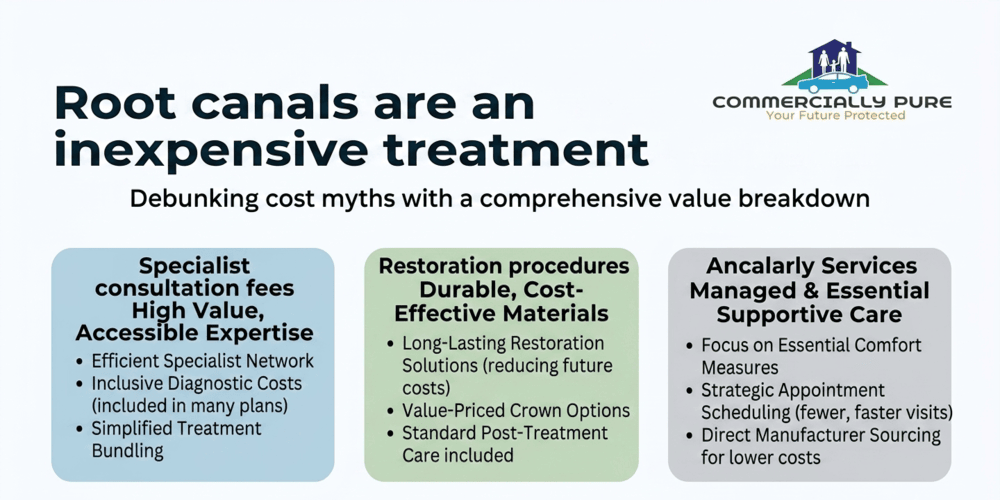
Root canals are an inexpensive treatment.
The prices of root canals vary from region to region, clinic to clinic, and based on the location of the tooth.
When planning a dental procedure, many patients will ask, “How much is a root canal?” Typically, urban areas and specialist endodontists offer higher fees than do general dentists in rural areas. If you have dental insurance, you can expect your coverage to take care of 50-80 percent of this procedure after the dental insurance deductible is paid. Your dentist should be able to provide you with an estimate of the cost of treatment once he has an exam of the tooth and knows how involved the treatment will be.
What’s a Root Canal
Root Canal Therapy is a procedure which takes out the infected or damaged inner tissue of the tooth, cleans and disinfects the canals, and seals the tooth to stop additional infection.
What is a root canal? If you mean what is a root canal surgery, then it’s a common procedure performed by dentists to save the tooth and calm down the pain experienced due to pulp infection or damage. It is done under local anesthesia and is no more uncomfortable than a typical filling for most patients. Maintaining the natural tooth will enable normal function and prevent movement of adjacent teeth.
Root Canal Process
There are several stages to the root canal procedure, and typically the treatment can be completed in a single or two appointments.
Root canal treatment usually starts with an exam and dental X-rays, which look for the extent of the infection. The dentist then:
Gives a local anesthetic to dull the area or site to be treated
Partially separates the tooth using a rubber dam
Extracts the pulp that is infected or damaged
Cleans out and disinfects the root canals
Fills in the canals with a biocompatible material called gutta-percha.
Dresses the tooth with a temporary or a permanent filling
Often, a dental crown will be fitted over this to restore the strength, structure, and function of the tooth, especially if it is a molar, which takes a lot of chewing forces.
How to Find out if you need a root canal?
When the pain and discomfort are severe and occur when your teeth are exposed to hot or cold liquids or foods, the gum tissue around the tooth is swollen, the tooth is discolored, or when you chew, you may need a root canal.
Here are some signs that may indicate you have a root canal: A dentist will be able to diagnose it through a physical examination and by taking dental X-rays. Early treatment is important; a delay in treatment may allow the infection to spread, which makes the infection further health risks and more comprehensive treatment.
The pain following a root canal procedure may persist for up to a few days. The pain from a root canal can persist for a few days.
Post-root canal pain goes away as time goes on and is typically relieved by 3-7 days each day.
One question many patients have is, “How long after a root canal will the pain last?” Some discomfort, tenderness, or sensitivity of the surrounding tissues is to be expected as they heal. Most people feel better in 3-7 days, and pain and discomfort can usually be managed with over-the-counter pain medications such as ibuprofen. If there is any pain, swelling, or discomfort that persists beyond 1 week, please get in touch with your dentist immediately, and they may want to see you for further examination and/or treatment.
What Is Root Canal
A root canal is a procedure in dentistry that is used to remove infected pulp from the inside of a tooth, kill the bacteria, and save the tooth without having to remove it.
When you ask yourself the question, “What is a root canal?”, what you’ll discover is that it is one of the most common restorative dental procedures seen today. Today, root canal treatment is a safe, effective treatment and is performed with local anesthesia, which results in minimal discomfort during the root canal treatment. The aim is to remove the cause of infection without compromising the natural tooth structure for its long-term function.
Cheap Insurance
Cheap insurance is insurance that has a low price and also supplies the security that is required.
If you’re looking for health, auto, home, or life insurance, it is important to get quotes from a number of different insurance carriers, so you can find an insurance coverage that is not only affordable, but has important features. Using online comparison tools, it’s simpler than ever to compare policies before buying.
Insurance Companies Online
A lot of online insurance companies offer the ability for their customers to compare insurance quotes, purchase insurance, manage their accounts, and submit insurance claims through a secure website or mobile app.
You will be able to compare what the different companies offer, the price, and reviews of the company that you are looking at before you make your decision. Most big companies offer free quote tools that take minutes to obtain a quote, but you don’t have to purchase anything.
Cheap Good Insurance
With a search for cheap good insurance, it’s important to keep in mind the coverage because sometimes the cheapest insurance isn’t the best.
The monthly premium shouldn’t be the only comparison you make when looking at insurance plans. Take into account the deductibles, policy limits, customer service ratings, and claims satisfaction scores. For consumers who take the time to shop around and compare multiple plans, cheap good insurance might be the best choice, but for those who don’t need extensive coverage and have a low-risk profile, the cheapest insurance may be best.
inexpensive Car Insurance Nearby Me
By researching the cheapest car insurance near me, drivers can find information about the insurance companies and discounts in their area and their own driving history.
Things like driving history, vehicle type, age, and ZIP code all have an impact on your insurance rates. The simplest way to get the best deal is to obtain at least a number of quotes. Some other discounts that many insurance companies will provide are safe driving records, having multiple policies, and defensive driving courses.
The answer is, Root Insurance is good.
Root Insurance is a cell car insurance firm that is utilizing a driving behavior app to create customized rates that may be an intriguing offer for safe motorists.
When drivers are looking at car insurance companies, one question they may have is Is Root Insurance good? Low-risk drivers can benefit from Root Insurance, which also takes into account your braking, turning, and driving habits before quoting you a price. But coverage options and rates differ from person to person and state to state; it’s important to do a bit of research before deciding which coverage to go with when it comes to Root.
Root Canal Cost
The cost of a root canal depends on the type of tooth, the complexity of the operation, the dentist’s expertise, and their location.
While the cost may differ from one case to another, in general, root canal treatment is a very economical treatment to save a damaged or infected tooth, as well as to prevent more expensive alternative options for tooth replacement. Patients are asked to get a quote for the dental care they are about to undergo, including the cost of any crowns, before any work is done so as to avoid any unwelcome surprises.
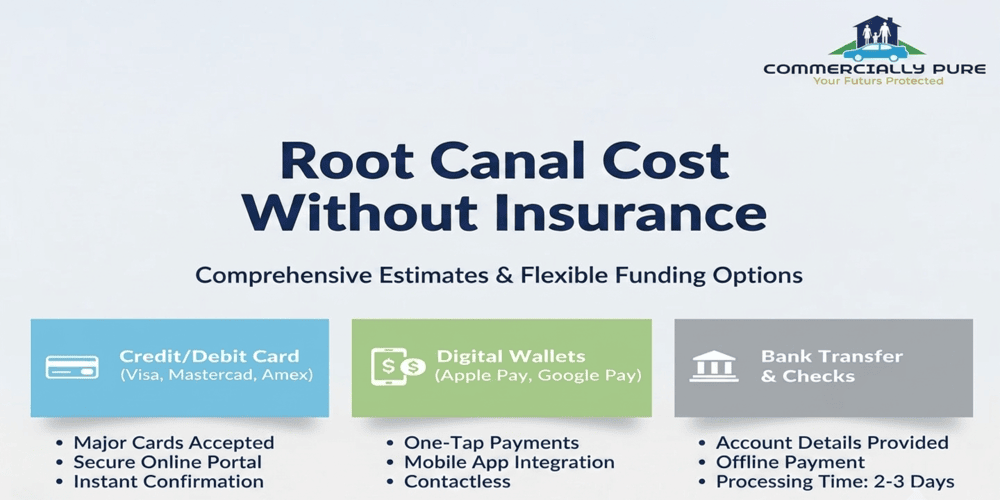
Root Canal Cost Without Insurance
If you don’t have insurance, the cost of a root canal will vary between $700-$1,800 depending on the type of tooth, severity of the infection, location, and dentist’s experience.
Overall, the treatment for front teeth tends to be less expensive than treatment on premolars and molars because there are fewer root canals on front teeth. If the patient doesn’t have insurance, then they will have to cover the costs of the entire treatment, but most of the dental practices will offer a payment scheme or financing program that will make it easier for the patient to pay. If you’re comparing quotes and asking for discounts or sliding-scale charges, you can save a great deal of money out-of-pocket.
After root canal, how long will it last?
Pain after treatment of the root canal typically lasts for a few days (3-7 days) and can be managed with over-the-counter pain medication.
Many people ask themselves How long does root canal pain last? if they are having a root canal treatment. It is normal for a few days for there to be mild pain, tenderness, or sensitivity in the surrounding tissues as they heal. People usually see a major improvement in 3-7 days. If the pain, swelling, or discomfort remains for more than a week, however, it is important to contact your dentist as further evaluation or treatment might be required.
Other charges not included in the “root canal treatment” charge.
Many patients are astonished to learn that this is not the only cost that goes into the root canal procedure. A dental crown is often suggested after root canal therapy to restore the strength and functionality of the tooth. The cost of the crown depends on the material and where it is installed, but can increase the overall cost several hundred dollars or more.
The patient should not only take the cost of the root canal treatment into account, but also plan for the cost of the crown for budgeting purposes to avoid any surprises.
What is the Cost of Emergency Root Canal With Insurance?
Root canal therapy that is performed in an emergency will be more expensive than a scheduled root canal treatment. The factors that cause an increase in cost are after-hours care, expedient diagnostic imaging, urgent specialist consultation, and complexity of managing an acute infection.
Delaying treatment will only aggravate the pain or infection, and cost even more in the future. In an emergency, it is better to seek treatment early than late, which is generally more cost-effective.
Root Canal Cost vs. Tooth Extraction – Which is cheaper in the long run?
Although it might seem like an inexpensive path to take at first, tooth extraction replacement solutions may cost much more than a root canal, whether you choose dental implants or bridges. Besides cost, the loss of a natural tooth can lead to teeth moving, bite problems, and even eventual loss of the jawbone.
The majority of dental practitioners agree that it’s more cost-effective to keep a natural tooth with root canal treatment in most cases.
So what happens if you don’t get treated due to cost?
Many people may not afford to have a root canal procedure, and this may turn out to be a poor choice financially and health-wise. A dental infection can progress to infect other teeth, bone, and even outside the mouth in extreme cases. The later the treatment is, the more it will cost (and the more that is necessary). The sooner, the better, as generally this results in reduced overall costs.
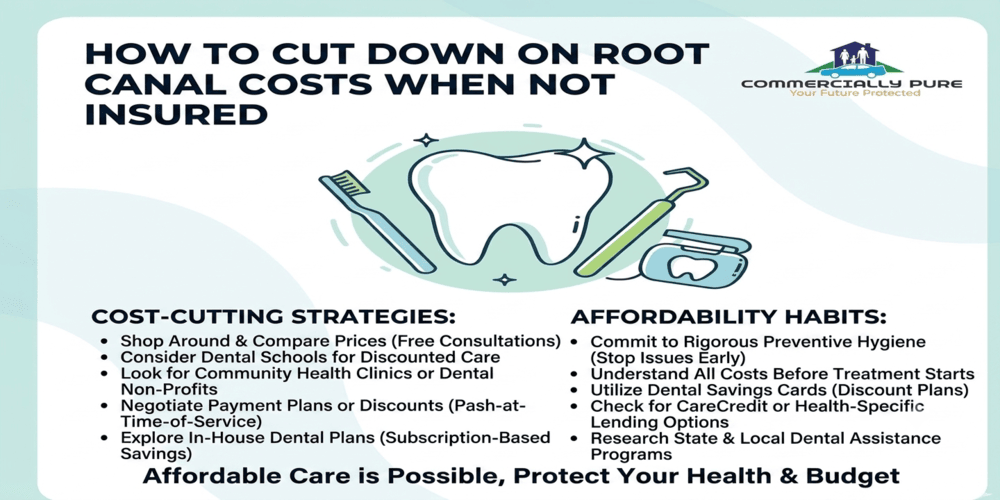
How to cut down on root canal costs when not insured
If you have no insurance, there are a number of things you can do to deal with the price of your root canal:
Don’t forget to treat the infection early, before it aggravates and further surgeries are needed.
Shop around and obtain quotes from a number of dental offices, since the range of prices will be quite large within a particular geographic locality.
Inquire about the discounts given to patients who are paying out of pocket; many practices provide these discounts to patients who are self-pay.
See dental schools that have supervised students or residents that are willing to do treatments for a reduced fee. There is overall good quality of treatment, but some delay in making appointments.
Discuss with some dental practices their savings plans as an alternative to traditional insurance.
Acquire third-party funding, including payment plans that can be set up to pay for treatment over time.
Without Dental Insurance Coverage, is it Worth It to Get a Root Canal?
In most cases, yes. Preserving a natural tooth maintains chewing function, facial form, oral health, and jaw health. The advantage of a root canal is that it is often more cost-effective (even if you do not have insurance coverage) than replacing the tooth with another, such as an implant or bridge.
Oral health: a link to the health of the body.
Dental infections are not stand-alone health events. Oral infections without treatment have been linked to other health issues such as cardiovascular and immune health problems. Dental care is an investment in good health–not an optional luxury! If a root canal infection is treated promptly, the oral and overall health won’t be harmed.
Pros of Root Canal Treatment and Dental Insurance
- Saves Your Natural Tooth: Root canal does not involve extraction and will eliminate infection.
- Relieves Tooth Pain: By removing infected pulp, the procedure can help alleviate severe toothache and sensitivity.
- Restores Normal Function: You can chew, speak, and smile comfortably after treatment and restoration.
- Prevents Further Infection: If the infected tooth is treated, bacteria will not spread to the other teeth and gums.
- Dental Insurance Can Lower Costs: Dental insurance plans can save a lot of money on out-of-pocket expenses when it comes to root canal treatment if the treatment is covered.
- Long-Lasting Results: When a tooth is treated properly, and if a dental crown is needed as recommended by the dentist, the treated tooth can last for many years.
- Preserves your Natural Bite: Root canal therapy preserves your natural bite and promotes dental health.
Root Canal Treatment and Dental Insurance cons.
- Can Be Expensive Without Insurance: Root canal treatment may cost a significant amount if you don’t have dental insurance.
- Sometimes More Than One Dental Visit May Be Needed: Depending on the infection, more than one dental visit may be needed, particularly if the infection is complicated.
- Temporary Discomfort: There’s some pain or sensitivity that’s normal for several days following the treatment.
- Additional Costs: It may be higher if a dental crown, X-rays, or additional treatments are required.
- Insurance Coverage Varies: Not all dental insurance plans necessarily cover root canal procedures and related treatments.
- Risk of Retreatment: There is a possibility that the tooth may get infected again and need more treatment, but it is rare.
- Waiting Periods: Certain dental insurance plans come with waiting periods for more serious dental care.
Conclusion
Root canal treatment can save an infected or damaged tooth as well as alleviate pain and avoid future dental problems and is an effective and reliable procedure. While treatment may be expensive if you don’t have insurance, there are a lot of dental insurance plans and payment options that make it easier to afford treatment. Always research dental practices, review your insurance options, and review all costs with your dentist prior to beginning treatment. Making the right choices in treatment selection at the right time can safeguard your oral health, maintain your natural smile, and save you from future expensive dental treatments.
Here are a few frequently asked questions about the cost of a root canal.
A1: The total cost of a root canal will be based on your insurance plan.
When a patient is insured, they will only have to pay out-of-pocket costs of $0 to $1,000 depending on the coverage percentage of their plan, annual insurance deductibles, and the tooth to be treated.
Q2: Why is a front tooth vs. molar root canal?
The treatment for molars is time-consuming and difficult to treat, and therefore much more expensive as opposed to front teeth with a single root.
Q3: Does the price of root canal include crown?
No. Often, a dental crown will be a separate treatment and cost, and will be billed separately from the root canal treatment.
Q4: Can I save money with a root canal as opposed to extraction?
While the extraction may seem like a more budget-friendly choice, root canal treatment could be even more expensive, making it a more economical option in the long run.
Q5: Can I set up a payment plan for a root canal treatment if I don’t have dental insurance?
Yes. Numerous clinics will have in-house repayment choices or have a third-party financing company in place, enabling individuals to set up repayment over a period of time.
Q6: Dental Schools is it a good option for root canal?
Root canal treatment is offered at a substantial discount by the dental schools, and is handled by a student or resident, under the direct supervision of a dentist. They are a great choice for patients who are on a tight budget.
Q7: Will there be a higher fee for an emergency root canal?
Yes. After-hours fees may be charged for emergency dental visits, which may include additional imaging and urgent care fees and potentially cause the cost to be higher than a scheduled visit.
Q8: What do you do if you put off treatment for a root canal because of the expense?
Infections will worsen with time if left untreated and can lead to greater pain, tooth loss, and treatment costs. The earlier you treat yourself for bed bugs, the less expense you will incur.
Q9: Does the general dentist do root canals or do specialists?
Yes. Root canals are a more cost-effective alternative to being referred to an endodontist, and many general dentists are qualified to do root canals.
Q10: Are there geographical differences in the cost of root canal?
Yes. The cost of a Root Canal will vary depending on the area, office overheads, the cost of labour in the area, and the standards of dental fees.