

Builders Risk Insurance Quote: Complete 2026 Guide
A builders risk insurance quote is the approximate amount of Insurance and coverage that a construction project will require to protect the project from physical loss or damage while the project is being built. The insurance quotes are calculated by insurers based on the project value, project location, type of construction, construction duration, security measures, etc.
Whether you are an owner, contractor or a real estate investor, one of the most important financial decisions you have to make before breaking ground is a builders’ risk insurance quote. Construction sites face many uncertainties from fires to theft and vandalism to extreme weather, and if coverage isn’t purchased, then financial loss and costly delays can result. A detailed quote will help you be able to understand the best policy choices, how much coverage is provided and if everyone is covered as expected.
This guide will tell you what builders risk insurance covers, the importance of builders risk insurance quotes, the various types of coverage, how factors affect your builders risk insurance premium and some tips to help you secure a good premium.
So, what is builders risk Insurance?
Builders risk Insurance is a form of property insurance that protects buildings and structures under construction or undergoing major renovation and/or remodeling. Builders risk Insurance is specifically written to cover the particular risks that exist at a site. At the same time, it is actively being constructed, such as open frameworks, heavy equipment and constant activity – as opposed to the standard property insurance policy, which covers completed properties.
A home builder’s risk insurance policy would cover damage caused by:
- Fire and lightning
- Strong winds and hail.
- Theft and vandalism
- Some natural disasters (including natural disaster endorsements)
Typically, the coverage is for the materials, supplies, equipment used in construction, in transit or temporarily stored off-site, as well as for the structure itself.
The policy is meant to be a short-term policy. It comes on the scene when the building construction starts and then goes away when the construction project is finished, or the building is occupied, or a permanent property insurance policy is in place. Builders risk Insurance is used by property owners, contractors and developers to protect their project and materials during the construction phase.
A Builders Risk Insurance Quote is vital to the construction business.
A builders risk insurance quote is not simply a formality; it’s a direct sign of the monetary organizing organizing as well as management for your project.
Once you’ve obtained a quote, you can:
Shop around for coverage options among different insurance providers
Before enrolling in the policy, familiarize yourself with its terms, deductibles, and exclusions.
Correctly assess the costs without leaving out coverage gaps
Satisfy lender and regulatory needs — builders’ risk Insurance is a requirement for many lenders and project owners prior to the granting of loans or permits.
By obtaining a quote at the outset of the project lifecycle, you will be insured prior to construction so you are on the right side of the law and the contract to meet all requirements.
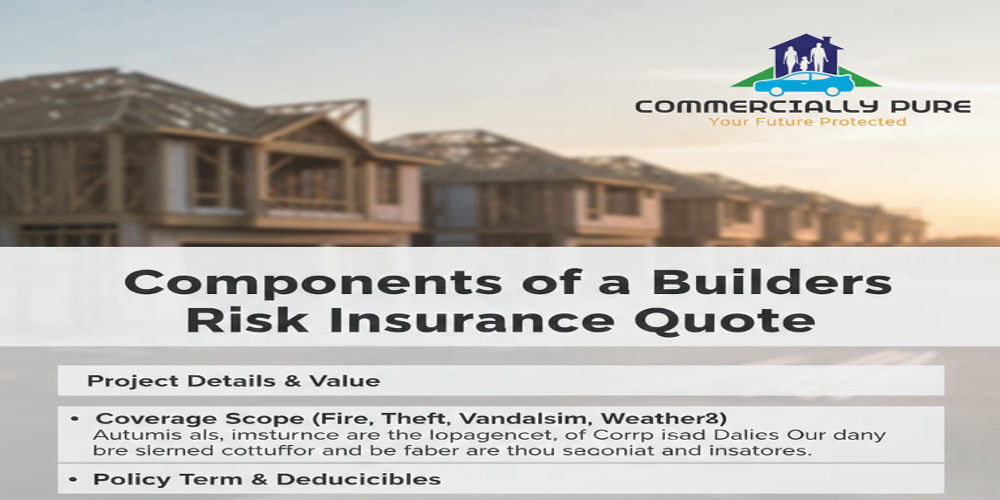
Components of a Builders Risk Insurance Quote
Upon receiving a builders risk insurance quote, you will notice that several different factors will be included in the quote, including new construction insurance, including how much coverage you are required to get and also how much you will require to pay for the insurance cover.
Total of the construction value, which is the sum of all the costs of materials, labour and equipment.
Duration of the policy (usually that of the project)
Limits of coverage and deductibles (how much the insurance company pays and how much you pay).
Optional add-ons which may include:
- Materials in transit
- Temporary on-site structures
- Debris removal
- Soft costs (Architectural, permits, additional loan interest, etc.).
- Project delay protection
- Integration of equipment and digital project management tools with BIM.
The final quote will also be influenced by location: if you live in a high theft area, a flood zone or an area prone to hurricanes, that will affect the final quote.
There are different types of builders risk insurance coverage.
There are many different kinds of builders risk insurance policies, and they can be tailored to the needs of a project. Knowing your options enables you to choose a policy that suits your project’s needs.
A typical core coverage will have:
- To protect the building from fire, theft, vandalism, windstorm, etc.
- Construction of products, materials and machinery (in storage, in transit or on site)
- Add-on coverage options can include:
- Extra costs (legal fees, engineering bills, temporary rent, etc.) that a project will have to pay when the project is running behind schedule.
- Debris removal – cost to remove damaged materials from a covered event.
- Scaffolding and temporary structures;
- Coverage for renovation (remodelling/alteration of existing buildings, not only new buildings)
Sustainable and modular construction materials such as cross-laminated timber and pre-fabricated units, which need different risk assessments to traditional constructions
These are now being included in more modern policies as BIM-integrated equipment and are increasingly being used by bigger sites using digital models and construction management software.
Builders Risk insurance – Residential vs. Commercial Projects
There are huge differences between what is covered under commercial and residential construction.
Residential builders risk Insurance is suited for single-family homes, townhomes, small apartment buildings and extensive remodeling projects. Under construction, it covers fire, theft, vandalism, wind damage and weather damage. This policy can be bought by the homeowner, the builder or the contractor and is generally used in conjunction with general liability and workers’ compensation coverage.
Commercial builders risk Insurance is available for large projects such as office towers, retail center and mixed-use projects. Commercial builds have larger coverage limits and risk assessments, due to the size and length of these policies.
Owners and contractors should ensure that the builder’s risk insurance quote their builder provides is right for the type of project they are building – under- or over-insuring can be costly.
Factors that affect a Builders Risk Insurance Quote.
Insurers have several factors to consider when calculating the price of a builders risk insurance policy:
- The expense of all the materials, labor and equipment.
- Location — areas in hurricane zones, floodplains, or with a high risk of theft have higher premiums.
- Wood-frame buildings are also a more insurable risk than steel or concrete and therefore are more costly.
- The longer the exposure period, the more expensive the projects will be.
- Lower risk with security measures including fencing, lighting, cameras and alarms can help reduce your premium.
- Limits, deductibles: the higher the deductible, the lower the monthly payment and the lower the deductible, the higher the monthly payment.
- Soft cost, Delay coverage and Sustainable material riders will be an option and will impact the final price.
Climate risk: Insurers are starting to incorporate climate data in projects that are vulnerable to climate change, beyond just historical loss data.
What’s the deal is, Builders Risk Insurance can help you protect your property from loss.
Builders risk Insurance helps to protect your project from unforeseen events. Construction sites are not uncommon where accidents, theft and extreme weather conditions occur — these are common hazards that every job site must deal with.
In the absence of coverage, the property owner/contractor will have to cover the cost of repairs, replacement and delays. Let’s look at an example that is simple: a fire inflicts damage on an unfinished building. With the right builders’ risk policy, repairs will be covered and halt a budget buster. Likewise, Insurance can help restore any losses that occur if tools or materials are stolen, and maintain the timeline.
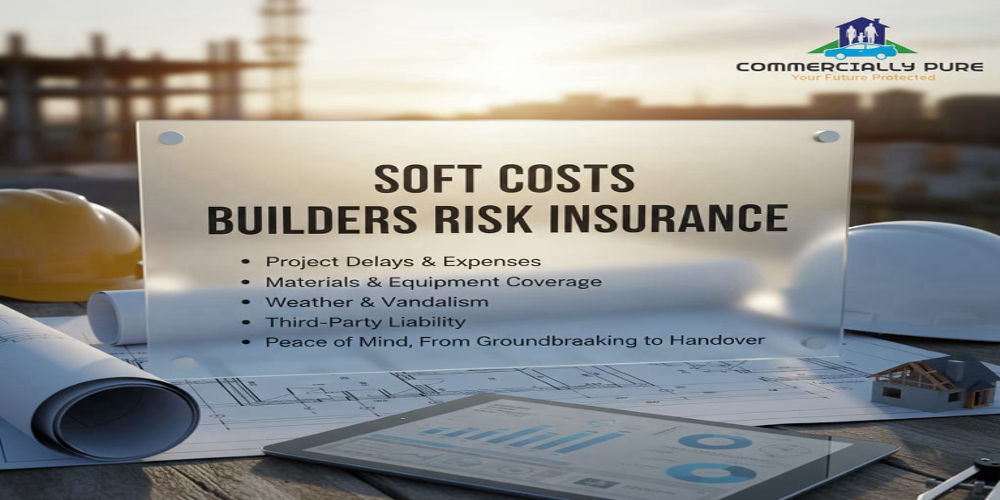
Having soft costs coverage is particularly advantageous for a large commercial project or a construction project that has time requirements. If a project gets stalled, expenses for new plans, engineers’ fees, legal fees, additional financing fees and temporary rentals of space can add up quickly. Soft costs are part of a builders risk insurance quote and can help make sure that those costs are covered if there is a covered event that has caused a delay.
What’s the Cost of Builders Risk Insurance?
Builders risk insurance costs depend on a number of variables pertaining to the project. Most insurance firms quote separately, so be sure to have several quotes before selecting Insurance.
Builders risk insurance cost is influenced by several factors such as:
Total construction value (or budget).
Location and proximity to disaster-prone areas in the project.
Type of construction and materials used
Length of the project and timeline.
Selected coverage amount/deductible
The bigger and riskier the job is, the more it will cost. Projects in hurricane, flood or earthquake-prone areas may be charged higher rates. A great way to obtain competitive rates and the correct sort of coverage is to shop around for Insurance.
Soft Costs and Builders Risk Insurance.
Builders risk insurance quotes are impacted by the project size, material, construction time, location and security, just as they are in the U.S. Any delay coverage, debris removal and soft costs are optional add-ons that are commonplace from domestic insurers.
If you are working overseas or are a worldwide developer working from one nation to another, there are extra factors:
Local building codes and regulations,
Currency exchange and cross-border shipment of materials risks
Political risk and differences in jurisdiction.
Short-term or seasonal construction project flextime policy needs.
The more complex a project is, the more likely that a custom quote is required for it, with larger coverage limits and more specific terms. In these situations, it is especially important to solicit several insurance companies for their quotes as well as use an insurance provider that has international construction experience with a broker.
How to Get the Most Affordable Builders Risk Insurance Quotation
To achieve a good rate and a competitive one, here are some steps:
At the start, put down details of your project. Prior to dealing with insurance companies, set the overall construction price, the duration, and the work to be completed. If you input the correct information, the correct quote will be produced.
Research and find the most competitive coverage. Don’t settle for the first quote you receive. Pay close attention to the coverage of the policy – the cheapest policy may have a high deductible or may not provide you with the coverage you are seeking.
Use a broker who is knowledgeable about the field. A construction insurance specialist broker will be able to identify coverage gaps and exclusions not apparent when policies are viewed in isolation.
Investigate site security. Insurers can draw the conclusion that risk is being managed as evidenced by fencing, lighting and cameras for surveillance. They all make sense and can help to reduce your premium.
Make sure to select the proper deductible. If the deductible is set too low, this increases the monthly bill; if it’s set too high, you’re left vulnerable. Choose a number that you can afford and are comfortable with.
Please read the complete policy. Confirm materials in transit and temporary buildings and add-on coverage (soft costs/delay protection) a project may require.
Some of the misconceptions about builders risk insurance are listed below.
There are a few misconceptions that can lead to inadequate coverage or gaps on claim day.
“It’s everything that’s required on a construction site. Builder’s risk Insurance will not cover worker injuries, which is addressed by workers’ compensation insurance.
“It has liability insurance. A builders do not cover bodily injury to third parties or damage to other people’s property. General liability insurance is required for that.
Only for Contractors. Property owners, developers and lenders are other interested parties in the construction process who typically require coverage.
It covers as long as I am interested in it. The policy terminates upon completion of the project, when someone moves in or when the policy period expires. If the project continues beyond the time limit, then a renewal or endorsement must be issued in order to maintain the coverage.
“It applies to everything from natural catastrophes.” Flood and earthquake losses are usually not covered by a standard policy and require an endorsement. Always look for dangers included (and not).
This article provides some tips about how to get a builders risk insurance quote.
A builders risk insurance quote is a preliminary insurance quote and will have an estimated premium that is based on information about the project. Insurers typically request the following information to ensure that they can give you an accurate quote:
The sum of all monetary costs of the construction of the project or project value.
Address and location of the project.
The anticipated dates of construction and length of construction
The type of building (residential/commercial/renovation)
The Insurance required and deductibles wanted
Contractors and property owners should get multiple quotes, which will allow you to view the cost, coverage terms and limitations of the different policies side by side.
What is meant by Builder’s Risk Policy?
Builder’s risk policies are a type of property insurance policy which protects structures being built from damage. Generally, it covers fire, theft, vandalism, windstorms and some weather-related issues which occur during the construction process. This is a policy that is frequently bought by builders, contractors, property owners and developers to minimize the financial risks involved in a project until it is complete.
What’s Builders Risk Insurance?
A short-term insurance policy that protects builders from the risk of damage or loss to construction materials, equipment and structures during the construction or renovation process. The policy is in effect until the building is either occupied or construction is finished.
Also known as builder risk insurance or builders’ insurance, builders’ risk Insurance is a type of coverage developed for construction projects of every dimension and type. Insures losses to partially completed buildings, building materials and some temporary structures. Builders’ risk insurance is based on the assumption that the project will be insured, whether it’s a new home, a commercial development or a large renovation.
What is Covered Under Builders Risk Insurance?
Builders risk Insurance is a coverage that can be utilized to safeguard the different risks which can arise while constructing a building. Damages may include those caused by:
Fire and lightning
Theft and vandalism
Wind and hail
Certain natural disasters
Damage to construction materials and temporary structures
At the work site, in some cases, equipment is stored,
Each insurance company and policy is different regarding coverage. For some natural disaster risks and project-specific risks, additional endorsements may be required. Equipment liability will usually be covered by a separate policy, as will the contractor liability.
Do You Need A Policy: Residential or Commercial Construction?
Builders risk insurance coverage could be purchased for residential or industrial building jobs. This will depend on the size, builders risk policy nature and value of your construction.
Residential construction insurance covers new home construction and extensive remodeling projects against loss due to accident, property damage, theft, weather and liability. It’s a type of coverage that is often bought by contractors, builders, and homeowners while building or doing a major makeover.
New home construction insurance is used to cover houses under construction, as well as some of the equipment on site during the construction process and the structure and materials of the house.
Commercial builders risk Insurance is best suited for larger projects, and usually has higher levels of coverage, longer policy periods, and complicated underwriting requirements.
Builders risk Insurance is usually used for temporary projects—when the building is built or occupied, permanent property insurance is used.
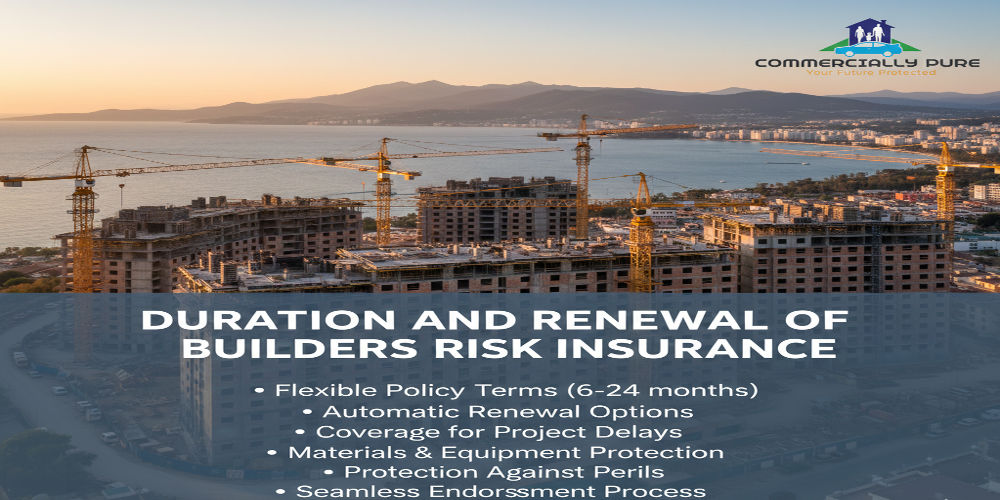
Duration and Renewal of Builders Risk Insurance
Builders risk Insurance is not a long-term insurance policy but rather a short-term insurance policy. When does the policy coverage start? It begins with the start of construction and is usually terminated when:
Substantial completion of the project.
The building has been put into use, or is being used.
A permanent property insurance policy comes into effect
This policy will come to an end
If the project is extended beyond the date in the policy, the policy shall be renewed or extended by endorsement, so as to avoid a gap in coverage. Owners, contractors and lenders all need to pay close attention to policy expiration dates to make sure that they are covered throughout construction.
The pros and cons of Building Risk Insurance.
By learning the pros and cons of builders’ risk Insurance, construction parties can make educated choices.
Pros:
- Helps prevent unforeseen damage to buildings under construction
- Insures against theft, fire, vandalism and most weather perils
- Reduces financial damages on construction projects
- May be applied in residential or commercial buildings.
- Covers materials and structures that are temporary and construction materials.
- Flexible coverage is available and can be customizedcustomized to suit different kinds of projects.
- Provides peace of mind to builders, contractors and property owners.
- Multiple Quotes: You can easily compare the pricing and coverage.
Cons:
- This will be temporary coverage and will be discontinued upon completion of construction or when the building is occupied.
- Additional coverage endorsements may be needed for some natural disasters and risks.
- The larger and/or more risky the project, the higher the premium will be.
- Exclusions of the policy may vary from insurance company to insurance company.
- Delays in construction could necessitate the extension of policies.
- Equipment and contractor liability coverage usually will not be combined in a single insurance policy, except in rare instances.
- Deductibles will be taken off the Insurance, and the Insurance will be paid out.
- Not all losses related to a project are necessarily covered.
Conclusion
Whether you are building a new house, a commercial building or doing renovations, builders’ risk insurance is a must to provide you with financial protection during the construction process. It helps protect against unexpected losses with buildings, construction materials, and other covered property, minimizing the financial loss due to accidents, theft, weather damage, and other covered events. When it comes to purchasing a builders’ risk policy, make sure to contact a number of companies, request insurance quotes, coverage limits, coverage exclusions, deductibles, and the terms of coverage, to ensure your construction project is well covered from start to finish.
Some of the most frequently asked questions about builders’ risk insurance.
Q1: Builder’s risk Insurance Quote is actually the initial question?
Builders risk insurance quote is an estimation of the coverage terms and the premiums that will be needed to protect the construction project. It comes with policy length, deductibles, limits and optional extras.
Q2: What people require builders’ risk Insurance?
Builder’s risk insurance is often demanded by the property owner, general contractor, developer and lender to ensure that their financial and material investment in construction is protected.
Q3: What does builder’s risk Insurance insure?
The coverage is standard coverage of the structure under construction, materials and equipment on site or in transit, theft and vandalism of materials and equipment, and any damage to the temporary structures used. Some optional endorsements are soft costs and coverage for debris removal and natural disasters.
Q4: Do Builders cover personal tools risk Insurance?
No, the standard builders’ risk policy does not provide coverage for personal tools and equipment, unless there is an endorsement.
Q5: What is the calculation of the premium of a builders’ risk Insurance?
Premiums are based on the overall value of the project, location of site, type of construction, length of project, security measures and optional coverage requested.
Q6: Can builders’ risk Insurance include soft costs?
Yes. Under the optional soft costs coverage, it covers additional costs (such as architectural fees, engineering costs, financing costs) incurred as a result of a delay in the project caused by a covered event.
Q7: What is the coverage period of Builders Risk Insurance?
Coverage is temporary. It is in effect from the beginning of construction through project completion, building occupancy or until a permanent property policy is in place.
Q8: Will lenders require builders risk Insurance?
Builder’s risk Insurance is often a requirement for construction loans and permits from many lenders and project owners.
Q9: Is it possible for a builder’s risk policy to be applied to a residential and a commercial project?
Not typically. Residential and commercial construction projects have unique risk levels, and policies (such as coverages and premiums) should reflect that.
Q10: What is the way to reduce my building’s risk insurance premium?
Some of the best ways of lowering your premium include making improvements on-site, using fire-resistant materials, having as short a project time as possible, and obtaining multiple quotes.
Q11: Are natural disasters such as floods or earthquakes covered by builders’ risk Insurance?
Typically, floods and earthquakes are not covered under standard policies. In most cases, these hazards will need to be covered by an endorsement or a standalone policy and coverage details should be agreed with your insurer prior to construction.
Q12: If my building project is postponed, what occurs?
Most insurers will allow the policy to be extended if the construction is beyond the original policy period, but this may be at a higher premium. It would be best to let your insurance company know as soon as there are project delays so that your insurance coverage isn’t compromised.